FREE SHIPPING over $200*
Continental U.S. only.
Continental U.S. only.
Continental U.S. only.
Continental U.S. only.
Flour sack towels have been utilized for centuries all over the world. Everything around us has a history, and believe it or not, some of that history touches our daily life and we are not even aware of it. At Mary's Kitchen Towels, we've been manufacturing and supplying 100% cotton flour sack towels since 2006 — and the more you understand where this material came from, the more you appreciate why it has outlasted almost every kitchen textile trend of the last two centuries. In the 1800's, many suppliers began to package flour, sugar and other foods in cotton sacks. This cut down on the need for bulky wooden barrels. These old fashioned flour sack towels were tightly woven bags and were later converted into useful items that could be utilized around the home. One of the most popular items is the tea towel, as these towels are very useful.
These sacks were found by the truckloads, and that is when individuals came up with the idea to utilize the resources that surrounded them. The sacks were cut into manageable sizes so that they could be used to dry dishes, wipe countertops and clean windows. From the 1800's to the 1950's, homes all over the globe utilized flour sacks for a variety of things within their home. Through the years a variety of foods were packaged in these sacks, including corn meal, chicken feed, sugar, and flour.
The cotton used in flour sacks was notably high quality — tightly woven, durable, and soft enough to use against skin. Manufacturers needed the sacks to hold 50 to 100 pounds of dry goods without tearing, which meant the fabric had to be built to last. That same durability is exactly why repurposed flour sack fabric outlasted the sacks themselves by decades.
Flour sacks are constructed from cotton and were tightly woven. Most sacks held 50 to 100 pounds of goods. From 1929 to the early 1940's, America went through the Great Depression. Times were hard and resources were difficult to come by. Housewives become inventive, utilizing everything that came into their home. Frugal in their ways, these reusable cotton sacks were made into clothing, toys, quilts, curtains, pillowcases, undergarments, cloth diapers, dish towels and much more.
The scale of this repurposing movement is striking in hindsight. Historians estimate that by the mid-1930s, an estimated 3.5 million women and children were wearing clothing sewn from flour sack fabric. It wasn't a fringe trend — it was a widespread necessity that quietly shaped American domestic life for a generation.
Manufacturers quickly recognized what was happening and responded strategically. By the early 1930s, flour and feed companies began printing their sacks with appealing patterns — florals, geometrics, novelty prints, and children's motifs — specifically to attract homemakers at the store. The Textile Bag Manufacturers Association ran national campaigns promoting the reuse of cotton bags, framing it as both economical and patriotic. Pattern booklets were published and distributed, showing women exactly how to transform sacks into dresses, curtains, and quilts. Some manufacturers even printed cutting lines and instructions directly on the sacks in washable ink.
During World War II, the U.S. War Production Board regulated feed bag sizes to six standard styles to reduce waste, and the repurposing culture intensified further. State fairs held sewing contests for flour sack garments, with prizes ranging from sewing machines to automobiles to trips to Hollywood. Rural magazines ran regular features on the topic. What had started as Depression-era necessity had become a full cultural institution by the time the war ended.
Manufactures saw this and acknowledged that consumers were utilizing their packaging. Because of this, manufactures began to offer different prints on their sacks, such as flowers or pretty border designs, doll and toy patterns. This made it the idea to transform the sack into something appealing. In return, it helped manufacturers entice housewives to buy their brand of flour. This would also encourage women to swap and sell their printed sacks to one another. Allowing them to get a particular print or pattern that they wanted.

Flour sack clothing became increasingly popular during this era. Women would make beautiful dresses for themselves, as well as clothing for their children. The manufacture labeled their sacks with ink that was washable, which allowed them to be made into anything and everything.
More and more unique designs continue to appear on flour sacks, as manufacturers recognized the hard times that the economy had fallen on. It was a great way to get housewives interested in buying their products. In fact, there were such a large variety that clothing could be made for the whole family, including dad.
Statistics show that an estimated 3.5 million women and children wore flour sack clothing during the Great Depression. It just became a way of life, as times were very hard. Some of the most classic patterns were brought about and manufactures still use some of them today.
In fact, some flour sacks came with their own instructions and ideas of what to use them for. These were written in washable ink but gave housewives the opportunity to transform their sack into something useful. If you had good sewing skills, it may be difficult to tell that your clothing was once a flour sack.
Sadly, packaging changed in the 1950s. Flour companies found an easier and cheaper way of packaging their products with paper sacks. This decreased the use of flour sacks, but it is a trend that has not completely died. In fact, flour sack towels are a vintage item that is found in homes all over the world. They remind us of simpler times, as well as proven to be a staple in cleaning and cooking. These towels are safe to use around foods and provide a lint free experience when being used to clean.
Vintage unbleached flour sack towels never really died, but they are making a huge comeback in today's society because they are so useful. However, you will not find this type of towel in your local dollar store, drug or hardware stores. They are offered by online retailers, which means you can still gain access to them relatively easily.
Kitchen flour sack towels will always be superior to the terry dish towel. This is mainly because they offer a lint free experience, which cannot be found in terry cloth. Flour sack cloths are highly absorbent, appealing, easy to care for and can be utilized in a number of household and DIY projects. If you are looking for a slice of history to utilize throughout your home, the flour sack cloth is the perfect solution.
The decline of flour sack fabric in the 1950s turned out to be temporary. Starting in the late 1990s and accelerating through the 2000s and 2010s, flour sack towels began a quiet but sustained comeback — driven by three distinct movements that converged at the same time.
The sustainability movement. As awareness of single-use plastic and paper waste grew, consumers began actively looking for reusable alternatives in the kitchen. Flour sack towels — lint-free, machine washable, long-lasting, and made from 100% natural cotton — became the practical answer to paper towel dependence. Unlike synthetic microfiber cloths, flour sack fabric is biodegradable and contains no plastic fibers. The same qualities that made it useful in 1930 made it relevant again in 2010.
The craft and maker movement. The rise of Etsy, Pinterest, and DIY culture in the 2000s introduced flour sack towels to a new generation of artists, embroiderers, screen printers, and crafters. The tight, smooth cotton weave — the same characteristic that made it ideal for repurposing a century ago — turned out to be perfect for embroidery needles, screen printing ink, iron-on vinyl, and hand-painting. Craft sellers discovered that blank flour sack towels were one of the best canvases available for handmade goods, and a cottage industry of custom tea towel makers emerged that continues to grow today.
The sourdough and artisan baking revival. The resurgence of home bread baking — particularly sourdough, which requires covering dough during long fermentation and proofing — created a new wave of demand for lint-free cotton cloths. Flour sack towels are ideal for this: breathable enough to prevent condensation, lint-free so they don't stick to dough, and large enough to cover a full proofing basket. Baking communities online consistently recommend them as an essential tool, and we've seen this translate directly into a significant portion of our orders coming from home bakers.
At Mary's Kitchen Towels, we started manufacturing and distributing flour sack towels in 2006 — right at the beginning of this revival. Over nearly two decades we've supplied everyone from individual home cooks to national retail chains, Etsy sellers building businesses on custom-printed towels, professional bakers, restaurants, and wholesale buyers across North America. The material hasn't changed. What's changed is how widely people have rediscovered what makes it genuinely useful.
In today's world, vintage is stylish, and the flour sack towel is no exception. Many homes still sport these amazing towels for good reason. Not only are they trendy, they are very durable and have the ability to absorb liquid really well. Better than traditional kitchen towels, and this is why many people rely on flour sacks for cleaning and cooking tasks.
Here are just some of the advantages that a flour sack towel can provide you.
★ Lint Free — Flour sack dish towels offer a lint free experience that is welcomed by those who are completing cleaning or cooking tasks. When using a towel to dry an object, you never want to worry about lint. Especially if that object is made of glass. Lint on your cooking utensils or glasses will not give your guest a great first impression. Designed with 100% cotton, flour sack towels can be used to complete any task around the home or kitchen. You will find these types of towels heavily utilized in the food industry.
★ Cleaning Made Easy — Flour sack dish cloths and towels are the perfect solution for spills, as they have the ability to quickly absorb. Plus, they can be machine washed and dried. This means that you never have to be without your Mary's flour sack tea towels. They are naturally soft, so no fabric softener is needed to keep these towels looking and performing as they should.
★ Appealing — If you desire a minimalist look, then you came to the right place. Not only do these vintage kitchen towels take you back in time, they are also a future proof product. They will blend with any decor, as they have a clean and simplistic appeal. Customization is a possibility, which will only make your lint free flour sack towels even more unique and personable. Sayings, monograms or a logo are just a few possibilities when wanting to alter the appearance of your towel. However, they are a classic looking towel that is setting many futuristic trends.
★ Absorbent — These towels are constructed to last, as well as give an optimal performance when it comes to absorbing the liquid. Flour sack is a naturally thirsty material, which means it will quickly soak up any liquid it is introduced to. This is why so many utilize them in cooking and cleaning tasks, as these are jobs that require a cloth that absorb liquid quickly. In fact, some people even choose to use these cloths to dry their hair after a shower or bath.
★ All Natural Surface — You will find that many parents use flour sack towels to care for their babies and toddlers because they are gentle on their skin. Babies have very sensitive skin, and that is why you want to only use items that are soft and comforting. Our 100% pure cotton flour sack towels offer the softness that a child needs and wants.
They make a great gift for any occasion and can help you complete a number of DIY projects. You can even personalize them with a name, monogram or logo. They are great to use for cleaning, cooking or in the bathroom. You may see them being used in restaurants, spas or catering events.
History has a habit of repeating itself, and many people find flour sacks to be quite fashionable. It is nothing to find these types of clothing still being utilized in the fashion industry. While these sacks got America through some of the toughest of times, they also taught us how to become resourceful in the things found around our homes.
These are some of the first products being utilized for DIY projects. If you are looking for a way to spruce up your decor, consider some flour sack art. If you are in need of some good cloths for cleaning or cooking, you will not be disappointed with the performance of a flour sack towel. You can buy these towels online, and they are still found in many retail stores. Diverse in their offerings, flour sack towels have come long ways, and have a very bright future ahead of them.
Shop Flour Sack Towels — Same Quality, Now Available Online
Mary's Kitchen Towels has been supplying 100% cotton flour sack towels since 2006. No minimum order. Free shipping over $200. Ships in 1 business day from California and Georgia.
Shop Flour Sack Towels → Wholesale Blanks → Custom Printing →
Written by
Mary's Kitchen Towels Team
We've been manufacturing and distributing 100% cotton flour sack towels since 2006 — supplying home cooks, bakers, artists, print shops, and retailers across North America. Questions? Contact our team →


These are the blank 27″×27″ flour sack towels that gift brands, DTG and screen printing studios, personalization businesses, and e...
View full details
DTG (Direct-to-Fabric) printing delivers unlimited colors and smooth gradients — ink that bonds directly into the cotton fiber, with no crac...
View full details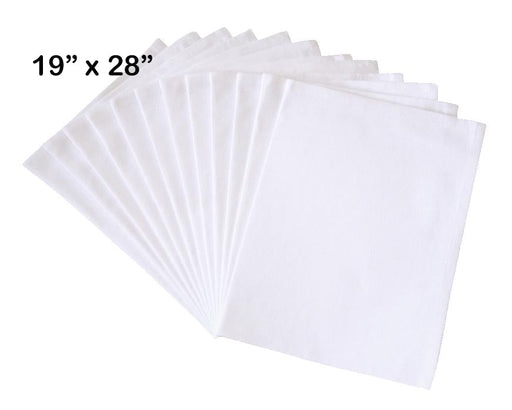
The 19″×28″ rectangle is the classic tea towel format — the size embroidery studios, gift brands, and personalization businesses r...
View full details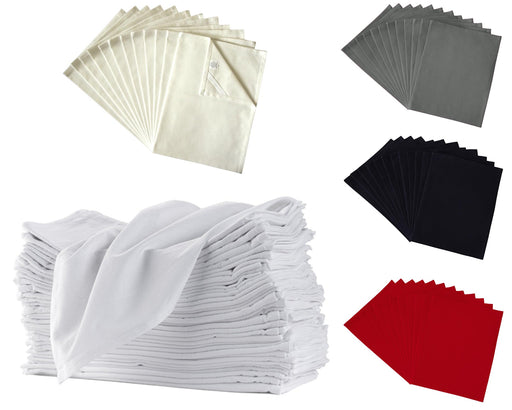
The same heavyweight 130 thread count, 100% cotton flour sack fabric as our white and natural towels — now in six colors: blue, gr...
View full details
Screen printing is the best choice when your design uses solid colors, bold shapes, or clean line art — and you're producing 24 or ...
View full details


