FREE SHIPPING over $200*
Continental U.S. only.
Continental U.S. only.
Continental U.S. only.
Continental U.S. only.

A tea towel is a thin, lint-free kitchen cloth made from tightly woven cotton or linen — designed to dry dishes, polish glassware, handle food, and cover baked goods without leaving fibers or residue behind. If you've ever tried to polish a wine glass with a terry cloth towel and ended up with a fuzz-covered mess, you already understand why tea towels exist.
We've been making 100% cotton flour sack tea towels since 2006 — so when it comes to answering what a tea towel is, what it's made of, what size it should be, and what you actually use one for, we know this product better than anyone. This guide covers all of it.
A tea towel is a flat-weave, lint-free kitchen cloth used for drying dishes, covering food, polishing glassware, and handling food safely. Unlike terry cloth dish towels — which have a looped pile and shed fibers — a tea towel has a tight, smooth weave that leaves no residue on surfaces or food.
The name comes from 18th-century England, where these cloths were used to dry and polish fine china tea sets, insulate teapots, and line tea trays. Today the term covers a much broader range of uses — but the defining characteristic is always the same: a smooth weave that won't scratch surfaces or leave lint behind.
Tea towel — quick definition
★ Fabric: 100% cotton or linen, tightly woven flat weave — no looped pile
★ Key property: Lint-free — won't shed fibers onto dishes, glassware, or food
★ Also called: kitchen towel, flour sack towel, dish towel (in casual use)
★ Not the same as: terry cloth dish towels, microfiber cloths, or paper towels
Traditional tea towels are made from 100% cotton or linen — both naturally lint-free when woven tightly. The fabric type determines how the towel performs, how long it lasts, and what it's best suited for.
A kitchen tea towel is simply a tea towel used for everyday kitchen tasks — drying dishes, wiping hands, covering rising dough, lining bread baskets, and cleaning up spills. The terms "kitchen towel," "tea towel," and "flour sack towel" are often used interchangeably in the US, though they can mean slightly different things depending on the context.
At Mary's Kitchen, every towel we make is designed for the kitchen — whether it's being used to dry glassware, printed with a custom logo, or sold wholesale to restaurant supply buyers. The fabric is always 100% flour sack cotton: food-safe, lint-free, and built for daily use.
Standard tea towel sizes range from around 12×12 inches up to 33×38 inches, depending on the manufacturer and intended use. Flour sack towels — the most popular type in North America — come in both square and rectangular cuts, and run larger on average than European-style tea towels.
Common tea towel sizes at Mary's Kitchen
★ 27×27 inches — our most popular size. Large enough to cover a mixing bowl, line a bread basket, or use as a proofing cloth for sourdough.
★ 19×28 inches — a classic rectangular proportion. Great for drying dishes, draping over the oven handle, or embroidery projects.
★ 19×19 inches — a compact square, popular for napkins, gift wrapping, and craft projects.
We also carry 12×12, 15×25, 16×28, and 33×38 inch options. Browse all sizes at Mary's Kitchen Towels →
The purpose of a tea towel goes well beyond drying dishes. Because it's lint-free, food-safe, and highly absorbent, a flour sack tea towel can replace several single-purpose kitchen items. Here are the most common uses:
Drying Dishes & Glassware
The tight weave dries without leaving streaks or lint — essential for polishing wine glasses and fine china.
Covering Bread & Dough
The most common answer to "what is a tea towel for baking" — drape it over rising dough or a bread loaf to keep heat in and drafts out without sticking.
Sourdough Proofing
A lightly floured tea towel lines a proofing basket (banneton) or covers a boule during its final rise. The breathable cotton regulates moisture without drying out the surface.
Drying Produce
Lay washed greens on a tea towel and roll them up to absorb moisture without bruising the leaves. Keeps salad crisp in the refrigerator.
Lining Bread Baskets
Keeps rolls and bread warm at the table while letting steam escape — unlike plastic wrap which makes crusts soggy.
Straining & Pressing
Use as a strainer for nut milks, squeeze out excess water from grated zucchini or frozen spinach, or press ricotta. The tight weave is fine enough to strain without tearing.
Covering Food
A clean tea towel covers bowls, platters, and trays naturally without clinging. Food-safe as long as the towel is 100% natural cotton with no added dyes or softeners.
Embroidery & Crafts
The smooth, flat weave of a flour sack towel is a favorite surface for embroidery, screen printing, and hand-stamping. A popular use for crafters, gift-makers, and small businesses.

In everyday conversation the terms get used interchangeably, but there is a technical difference. A tea towel is always flat-weave and lint-free — designed for food contact and polishing. A dish towel traditionally refers to a thick terry cloth towel used for soaking up spills and drying hands. A kitchen towel is a catch-all term that covers both.
Flour sack towels are the only type that genuinely do both jobs — absorbent enough to dry dishes quickly, and lint-free enough to polish glassware without leaving fibers behind. For a full breakdown, see our guide: Tea Towel vs Dish Towel — What's the Difference?

Not all tea towels are equal. Flour sack cotton — a 100% cotton flat-weave fabric originally used in 19th-century flour packaging — has been the preferred kitchen cloth in North American households for over a hundred years for good reason.
What makes flour sack towels different
★ More absorbent than standard cotton tea towels — the diagonal weave increases surface area and pulls moisture faster.
★ Gets better with every wash — unlike terry cloth which degrades, flour sack cotton opens up and becomes more absorbent over time.
★ 100% food-safe — no synthetic fibers, no chemical coatings, no dyes that transfer. Safe to use directly on produce, baked goods, and tableware.
★ Completely lint-free — the tight diagonal weave doesn't shed fibers, even after hundreds of washes.
★ Printable and embroiderable — the smooth flat surface takes screen printing, DTG printing, and hand embroidery better than any other kitchen textile.
Our flour sack towels are 130 thread count, 100% unbleached cotton, available plain white or in 8 colors, and in multiple sizes from 12×12 up to 33×38 inches. Bulk pricing available with no minimum order — and free shipping on orders over $200.
💡 One care tip before you use them: Always wash flour sack towels before first use. A brand-new towel has a light manufacturing coating that temporarily reduces absorbency. One wash removes it. No fabric softener — ever — as it coats the cotton fibers and actively repels water.
Shop Mary's Kitchen Flour Sack Tea Towels
100% cotton · Lint-free · Multiple sizes · 8 colors · 3,900+ five-star reviews. Free US shipping over $200. Ships in 1 business day.
Shop Tea Towels → Wholesale Blanks →
Written by
Mary's Kitchen Towels Team
We've been supplying 100% cotton flour sack towels since 2006 — to home cooks, bakers, professional kitchens, and wholesale buyers across North America. Questions? Contact our team →


These are the blank 27″×27″ flour sack towels that gift brands, DTG and screen printing studios, personalization businesses, and e...
View full details
DTG (Direct-to-Fabric) printing delivers unlimited colors and smooth gradients — ink that bonds directly into the cotton fiber, with no crac...
View full details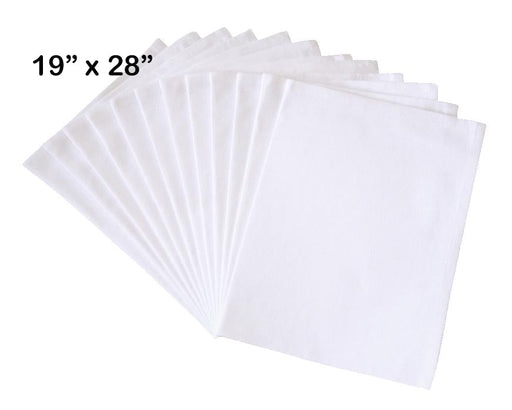
The 19″×28″ rectangle is the classic tea towel format — the size embroidery studios, gift brands, and personalization businesses r...
View full details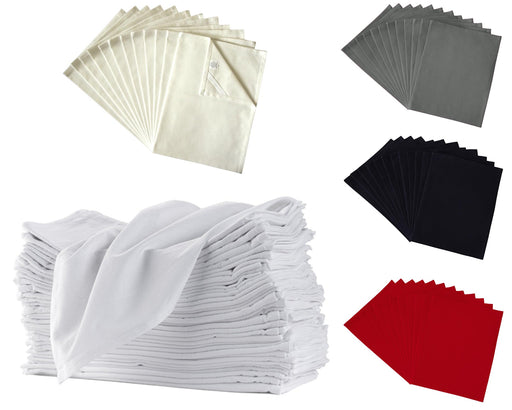
The same heavyweight 130 thread count, 100% cotton flour sack fabric as our white and natural towels — now in six colors: blue, gr...
View full details
Screen printing is the best choice when your design uses solid colors, bold shapes, or clean line art — and you're producing 24 or ...
View full details


