FREE SHIPPING over $200*
Continental U.S. only.
Continental U.S. only.
Continental U.S. only.
Continental U.S. only.

Monks cloth is a 100% cotton, open even-weave fabric with approximately 14 holes per inch — the most popular and most forgiving backing fabric for punch needle, rug hooking, and electric tufting guns. If you've landed here because you're starting a punch needle or tufting project and want to know which fabric to use, the short answer is monks cloth. This guide explains exactly what it is, why it works so well, how to choose the right kind, and how to use it correctly.
We carry 100% cotton monks cloth by the yard — 60 inches wide, 14 holes per inch, with white grid positioning lines in both directions.
Monks cloth — quick definition
★ Material: 100% cotton — loose even-weave basketweave construction
★ Holes per inch: ~14 (correct for punch needle) — not to be confused with 7-hole Swedish weaving cloth
★ Key feature: Open enough for the needle to pass through cleanly — tight enough to hold loops in place
★ Best for: Punch needle · Rug hooking · Tufting gun · Machine embroidery
★ Not the same as: Burlap (jute) · Primitive linen · Aida cloth · Weaver's cloth
Monks cloth is a heavy 100% cotton fabric woven in an open basketweave pattern — four threads over four threads, creating a grid of evenly spaced holes. This even-weave construction is what makes it ideal for craft techniques that involve pushing or pulling a tool or yarn repeatedly through the fabric. The holes are large enough for the tool to pass through cleanly, but the cotton double-thread weave is strong enough to grip and hold the loops after each punch.
The name comes from medieval monks who used this fabric to make robes and garments. The weave structure has remained essentially unchanged because it simply works. Today it's primarily used by the craft community for punch needle, rug hooking, and tufting — techniques that have seen a significant resurgence in popularity over the past decade.
This is the most important thing to know before buying. There are two completely different fabrics both sold under the name "monks cloth" — and buying the wrong one is one of the most common mistakes beginners make.
The easiest way to check: look for the white grid lines. The correct punch needle monks cloth always has white positioning lines woven in. If the fabric is a solid color with no lines, it is the Swedish weaving variety.
Punch needle is a craft technique where a hollow needle threaded with yarn is pushed repeatedly through a backing fabric to create loops on the reverse side — building up a pile that forms the design. The quality of your backing fabric determines whether your loops stay in place, whether your needle moves smoothly, and whether you can correct mistakes without tearing the base.
Monks cloth is the preferred backing for punch needle for three reasons. First, the 14-hole-per-inch open weave allows the needle to pass through and retract cleanly in any direction without snagging. Second, the cotton double-thread construction grips the yarn loops after punching — they stay put without any adhesive or backing needed. Third, monks cloth is highly forgiving — you can "frog" (pull out loops and re-punch the same area) many times without damaging the fabric. This is the single biggest advantage over other backings and the reason it's particularly well-suited to beginners.
Punch needle compatibility — 14-hole monks cloth works with:
★ Oxford punch needles — all sizes, fine point and regular point
★ Jan Bent needles — all sizes
★ Lavor adjustable needles — all settings
★ Rug yarn and bulky weight yarn — ideal pairing
★ Worsted and DK weight yarns — works well, especially with fine point needles
Tip for slippery yarns: If you're using cotton or other slippery fiber and your loops aren't staying in after punching, pre-wash and tumble dry your monks cloth before starting. The slight shrinkage tightens the weave just enough to grip the loops more firmly.
Rug hooking is a slightly different technique from punch needle — instead of pushing a needle through the fabric from above, you pull loops of wool strip or yarn up through the backing from below using a hook. Both techniques share the same requirements for the backing fabric: open enough for the tool to pass through, strong enough to hold loops, and durable enough to survive heavy use once the rug is finished.
Monks cloth is preferred by many rug hookers over the traditional alternatives. Burlap, the classic rug hooking backing, degrades over time — the jute fibers break down, especially with washing, and tears appear in heavy-use rugs. Primitive linen is excellent but significantly more expensive for large rug projects. Monks cloth sits between them — more durable than burlap, more affordable than linen, and with the added advantage of grid positioning lines for keeping designs straight.
The 60-inch width of our monks cloth is particularly useful for rug hooking — it means you can make rugs up to 5 feet wide from a single piece of fabric without having to join pieces mid-project.
Electric tufting guns are a more recent addition to the rug-making world — they mechanically drive yarn through a backing fabric at speed, producing either cut-pile or loop-pile tufted rugs far faster than hand punching. The backing fabric needs to be strong enough to withstand this mechanical action repeatedly across a large surface area.
100% cotton monks cloth at 230g/m² weight with double-thread construction handles the action of tufting guns well. The key is to stretch it very tightly on a tufting frame before starting — a slack backing will cause uneven loop heights and the gun will struggle to punch through cleanly. The white grid lines on our monks cloth are particularly useful here: they make it straightforward to align the fabric squarely on the frame and to track where you are in a large design.
Tufting frame tip: Stretch the monks cloth as tight as a drum before starting. The tighter the stretch, the more consistent your pile height and the easier the gun moves through the fabric. Check tension every 15–20 minutes on large projects — the fabric can relax as you work.
Beyond punch needle and rug making, monks cloth works well as a base fabric for machine embroidery and large-scale hand embroidery. The consistent open weave feeds evenly through embroidery machines and holds stabilizer well. For hand embroidery, the visible grid makes needle placement straightforward without needing to count threads.
It's particularly popular for large decorative wall hangings and textile art pieces where the natural beige color of the fabric is meant to show as part of the design — the open weave gives the work a textured, artisanal appearance that tighter embroidery fabrics can't replicate.
The three most common punch needle and rug hooking backing fabrics each have distinct strengths and weaknesses:
Always add at least 5 inches on every side of your finished design size. This extra fabric is needed to grip in your frame while punching and to hem or finish the edges of the completed piece. For example: a 12″ × 12″ pillow design needs at least 22″ × 22″ of monks cloth. A 24″ × 36″ rug needs at least 34″ × 46″. For large rugs, always order more than you think you need — running short mid-project means a visible join line.
Recommended if your finished piece will be washed regularly — rugs, cushion covers, or kitchen items. Pre-washing removes residual sizing and causes any shrinkage before you start rather than after. It also tightens the weave slightly, which helps hold loops from slippery yarns more securely. Machine wash warm, tumble dry low.
Stretch the monks cloth as tightly as possible on your hoop or frame before starting. The tighter the tension, the smoother the punching. When under tension, the small holes in the weave open up slightly, making it easier for the needle to pass through cleanly. When you remove the finished piece from the frame, the fabric contracts back and grips the loops even more firmly — which is partly why monks cloth loops stay in without adhesive backing.
Use the white grid lines to align the fabric squarely. The lines run in both directions approximately every 2 inches — pull the fabric straight along these lines when mounting to ensure your design will sit square on the finished piece.
To remove loops and start again in an area, simply pull the yarn out from the back of the fabric. The loops will come free cleanly without tearing the weave. You can punch and re-punch the same area many times on 100% cotton monks cloth — far more times than burlap or linen will tolerate. This is one of its biggest advantages for beginners who are adjusting designs or practicing.
Monks cloth will fray at cut edges if left untreated — this is normal for any loosely woven cotton fabric. There are four ways to handle it:
Always treat the edges before stretching on your frame — fraying gets significantly worse once the fabric is under tension.
"Primary tufting cloth" is a term used by some tufting suppliers for a poly-cotton or polyester-cotton blend backing fabric sold specifically for tufting guns. It's typically stiffer than 100% cotton monks cloth and is designed to be stretched on a tufting frame. Here's how they compare:
For most tufting projects, punch needle, and rug hooking, 100% cotton monks cloth is the better all-round choice. The poly-cotton blend is worth considering only if you're running a high-volume commercial tufting operation with very large rugs.
Yes — 100% cotton monks cloth takes dye well. Because it is a natural fiber, it is compatible with fiber-reactive dyes (like Procion MX), all-purpose dyes (like Rit), and natural plant-based dyes. The natural unbleached beige base color means dyed results will be slightly warmer in tone than dyeing white fabric — factor this in when mixing colors.
Most punch needle and tufting projects use the monks cloth as a backing that gets fully covered by yarn — so dyeing the backing is not usually necessary. However, for projects where the monks cloth background will show (embroidery, wall hangings, or Swedish weaving), dyeing gives you more color options than the natural beige. Pre-wash the fabric before dyeing to remove any residual sizing.
For punch needle and tufting, you want approximately 14 holes per inch (also described as 12–13 holes per inch, or 24–28 threads per inch — these all refer to the same fabric weight). This is the most commonly searched spec by experienced buyers. Do not buy the 7-hole Swedish weaving monks cloth — it will not work.
No. Monks cloth is 100% cotton — soft, durable, and highly forgiving. Burlap is made from jute fibers — rough, brittle, and degrades over time particularly with washing. Burlap tears under repeated punching and is not recommended for any project that will see regular use.
No. Aida cloth is a stiffer, more tightly woven fabric used for cross stitch embroidery with fine thread. The holes are smaller and the weave is firmer. Monks cloth has a more open, flexible weave suited to punch needles and hooks — you cannot substitute one for the other. Monks cloth is also much softer than Aida.
Yes — 100% cotton monks cloth at 14 holes per inch is compatible with both cut-pile and loop-pile electric tufting guns. The key is to stretch it extremely tightly on a frame before starting. The 230g/m² weight and double-thread construction give it enough strength for the mechanical action of the gun.
Treat the cut edges before stretching on your frame — serging is the most durable option, a zigzag stitch works if you don't have a serger, and Fray Check liquid is the quickest fix for small projects. Always treat edges before stretching — fraying gets significantly worse under tension.
Yes — 100% cotton monks cloth takes fiber-reactive dyes, all-purpose dyes, and natural dyes well. The natural beige base gives slightly warmer results than white fabric. Pre-wash before dyeing to remove sizing.
The standard for punch needle and tufting monks cloth is natural unbleached beige — this is what most suppliers carry, including us. The beige background is practical because it will be fully covered by yarn in most projects. If you need a specific background color, the natural beige can be dyed before starting your project.
Monks cloth for punch needle is not reliably stocked in most craft chain stores. What Hobby Lobby and Joann typically carry is the 7-hole Swedish weaving monks cloth — not the 14-hole punch needle cloth. Buying online is the most reliable way to get the correct fabric. Our monks cloth ships from Ontario, California — most US addresses receive it within 2–3 business days.
Ready to start your project?
We carry 100% cotton monks cloth — 60" wide, 14 holes per inch, white grid lines in both directions. Natural unbleached. Serged edges. From $24.99/pack. Ships in 1 business day from California.
Shop Monks Cloth →


These are the blank 27″×27″ flour sack towels that gift brands, DTG and screen printing studios, personalization businesses, and e...
View full details
DTG (Direct-to-Fabric) printing delivers unlimited colors and smooth gradients — ink that bonds directly into the cotton fiber, with no crac...
View full details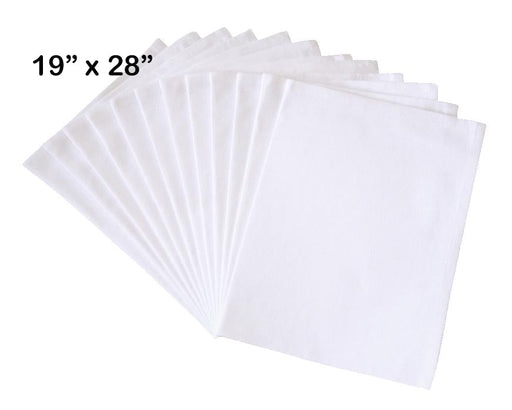
The 19″×28″ rectangle is the classic tea towel format — the size embroidery studios, gift brands, and personalization businesses r...
View full details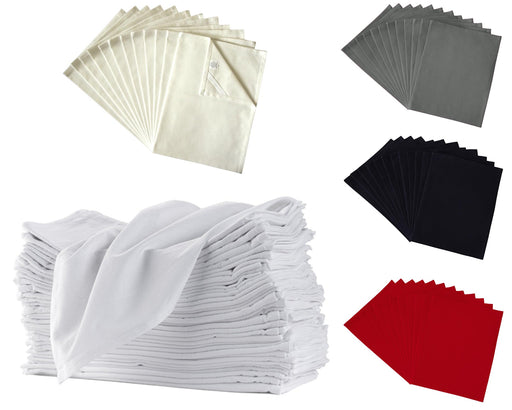
The same heavyweight 130 thread count, 100% cotton flour sack fabric as our white and natural towels — now in six colors: blue, gr...
View full details
Screen printing is the best choice when your design uses solid colors, bold shapes, or clean line art — and you're producing 24 or ...
View full details


