FREE SHIPPING over $200*
Continental U.S. only.
Continental U.S. only.
Continental U.S. only.
Continental U.S. only.
Tea towels and dish towels are not the same thing — but they're so often confused that people use them interchangeably. That's a problem, because using the wrong one for the wrong job leads to lint on your glassware, streaks on your silverware, or an inadequate cloth when you actually need to absorb something.
This guide covers exactly what makes each one different, what each one is actually good at, and why a flour sack towel ends up being the better choice for most kitchen tasks anyway. We've been supplying flour sack towels to home kitchens, restaurants, and decoration businesses since 2006 — this is the comparison we get asked about most.
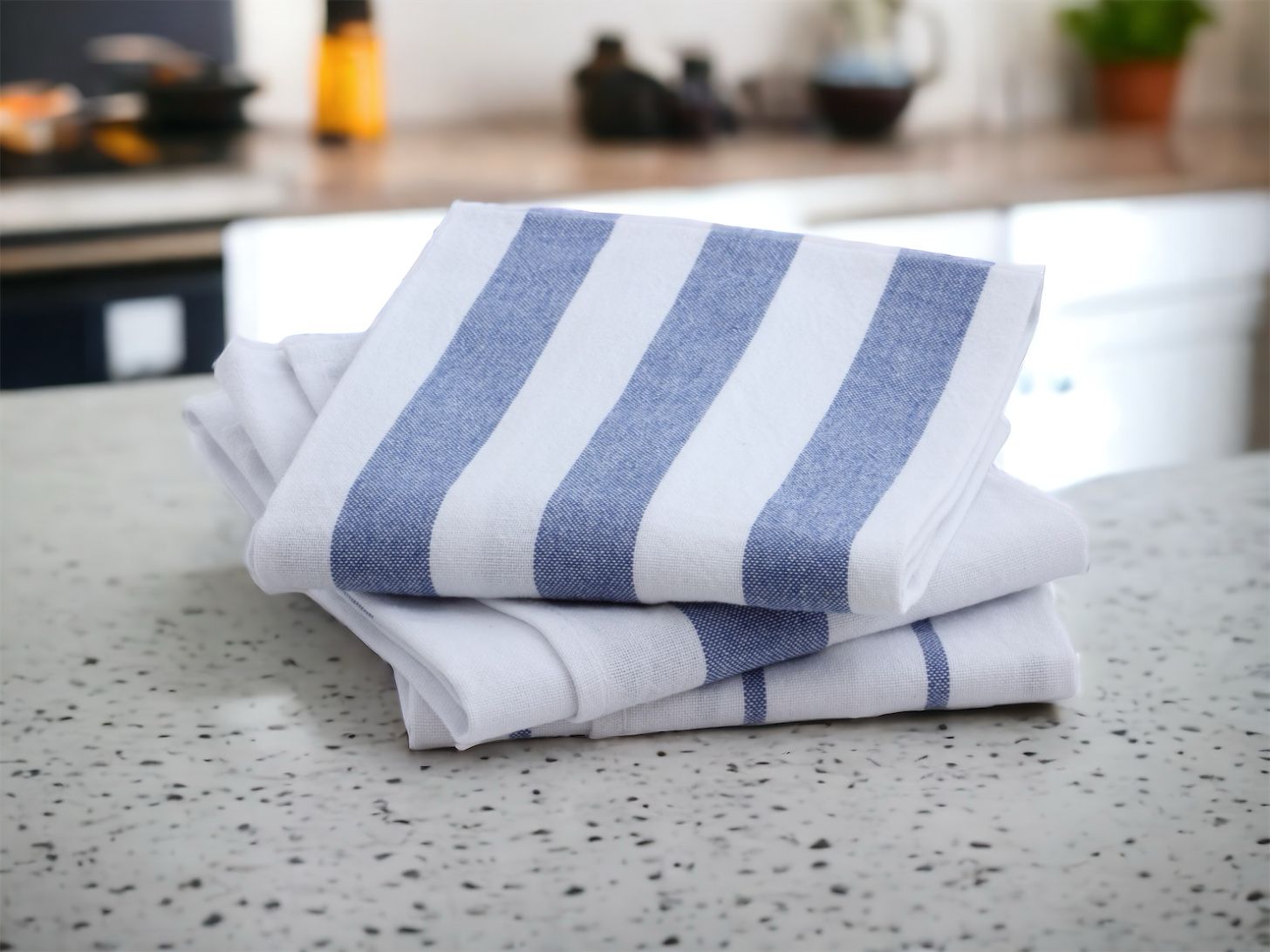
A tea towel is a thin, flat-woven cloth made from cotton or linen — tightly woven enough to be completely lint-free. The name comes from 18th-century Britain, where they were used to dry the delicate china at afternoon tea, polish silverware, and line tea trays. Their defining characteristic is what they don't do: they don't shed fibers.
That makes them the right choice for anything that involves food or glassware. You can dry a wine glass with a tea towel and hold it up to the light — no lint, no streaks. The same task with a terry cloth towel would leave behind tiny fibers you don't want anywhere near a plate or a glass.
Thin, tightly woven 100% cotton or linen are both excellent for tea towels. The tight weave is what prevents lint. Linen has a slightly crisper feel and is extremely durable. Cotton flour sack fabric — a plain-woven, diagonally structured 100% cotton — is arguably the best of both: lint-free, soft, absorbent, and food-safe.
Avoid anything with a looped or pile weave (that's terry cloth territory), and avoid synthetic blends — polyester sheds microscopic fibers you don't want on food or glassware.
A dish towel is a thick, highly absorbent towel with a looped pile weave — usually terry cloth or a similar loop-woven cotton. It absorbs water fast, which makes it excellent for drying hands, soaking up spills, and wiping down countertops.
The trade-off is lint. The looped pile structure sheds tiny fibers with every use, especially when new. That makes dish towels the wrong choice for polishing glassware or drying dishes you'd hold up to the light — the fibers that make it absorbent are the same ones that leave residue behind.
Historically, early dish towels in North America were made from repurposed animal feed sacks — rough osnaburg fabric and burlap. Today's versions are almost always terry cloth cotton.
The confusion: In North America, "dish towel" is often used as a catch-all for any kitchen towel. In the UK, "tea towel" covers the same ground. In practice, most kitchens need both — a lint-free towel for food and glassware, and an absorbent one for cleanup — or one cloth that does both jobs well.
Here's how the two compare across the properties that matter in a kitchen:
| Property | Tea Towel | Dish Towel |
|---|---|---|
| Weave | Tight flat weave — no pile | Looped pile weave (terry cloth) |
| Fabric | Cotton or linen | Terry cloth cotton |
| Absorbency | Moderate — more than paper towels | High — comparable to a bath towel |
| Lint | Lint-free | Sheds fibers — especially when new |
| Food safe | Yes — safe for direct food contact | Not recommended — sheds fibers |
| Polishing glassware | Excellent — no streaks or lint | Poor — leaves fiber residue |
| Soaking up spills | Moderate | Excellent |
| Drying hands | Adequate but not ideal | Excellent |
| Covering dough | Yes — ideal | No — too thick and fibers transfer |
| Embroidery & printing | Excellent blank for decoration | Not used for decoration |
| Durability | High — tight weave lasts for years | Moderate — pile degrades with washing |
The lint-free, food-safe quality of tea towels makes them the right cloth for tasks where contact with food or clean surfaces matters:
This is what tea towels were originally designed for. The tight weave polishes without leaving tiny fibers on wine glasses, silverware, or fine china. If you've ever held a glass up to the light and seen a cloud of lint, you used the wrong towel.
A tea towel draped over a bowl of rising bread dough keeps warmth in and drafts out without sticking to the surface. The tightly woven cotton breathes just enough while insulating. Terry cloth would stick to the dough and transfer fibers.
A tea towel folds cleanly to line a bread basket or serving tray — keeping rolls warm without absorbing moisture into the bottom of the bread the way a thick terry towel would.
Tea towels made from 100% natural cotton are food-safe and excellent for drying washed fruits, vegetables, and herbs — or wrapping salad greens in the refrigerator to keep them crisp longer.
The flat cotton surface is a standard blank for embroidery, screen printing, DTG, and HTV work. The tight weave holds stitch and ink cleanly. A tea towel is often more valuable as a decorated gift product than a plain kitchen item — and decorating a tea towel rather than a terry cloth towel produces a much cleaner, more retail-ready result.

Where dish towels genuinely outperform tea towels is in fast absorption:
When something gets knocked over on the counter, a terry cloth dish towel soaks it up faster than any flat-woven cloth. The looped pile creates more surface area in contact with liquid, absorbing it in one pass.
The fluffy pile of a terry cloth towel absorbs water from your hands almost instantly. A flat tea towel does the job but takes more effort and more passes. For a towel hung by the sink purely for hand drying, terry cloth is the better choice.
Wiping down cooking surfaces, stovetops, and countertops at the end of cooking — any task where you need maximum absorption and aren't worried about lint transfer — is where a dish towel belongs.
Most kitchens shouldn't have to choose between a lint-free tea towel and an absorbent dish towel. Flour sack towels solve both problems in one cloth.
Flour sack towels are made from 100% cotton in a tight diagonal weave — more absorbent than a typical tea towel but completely lint-free. They dry quickly, hold up through repeated washing, and are safe for direct food contact. The same cloth works for polishing glassware, covering bread dough, drying produce, and cleaning up spills.
The 130 thread count diagonal weave on a flour sack towel holds significantly more water than a standard thin linen tea towel. They absorb well enough for most dish-drying tasks without the lint that makes terry cloth unsuitable around food and glassware.
Unlike terry cloth, a flour sack towel doesn't shed fibers. You can dry a wine glass, polish silverware, or cover rising dough without worrying about residue transfer. The tight weave stays intact through hundreds of wash cycles.
Terry cloth dish towels degrade over time — the loops flatten, absorbency drops, and the towel starts to feel coarse. Flour sack cotton softens and becomes more absorbent with each wash. A well-used flour sack towel is better than a new one.
The flat cotton surface is the standard blank for embroidery studios, screen printers, gift brands, and anyone personalizing kitchen textiles. A decorated flour sack towel — embroidered, screen printed, or DTG printed — is a finished retail product. A decorated terry cloth towel is not. If you're in the business of decorating and selling kitchen towels, flour sack is the substrate that makes it work.
We carry 100% cotton flour sack towels in sets of 12 — white, natural, and six colors — and wholesale bulk pricing for decoration businesses and resellers. We also offer custom printing on flour sack towels — screen printing, DTG, and edge-to-edge all-over printing.
For care: machine wash warm, tumble dry low, no fabric softener. They get softer and more absorbent with each wash. Full guide: How to Wash Tea Towels →
Tea towels are thin, flat-woven cotton or linen cloths — lint-free and food-safe. They're used for drying and polishing glassware and silverware, covering dough, and handling food. Dish towels are thick terry cloth — highly absorbent with a looped pile, good for soaking up spills and drying hands, but they shed fibers and shouldn't touch glassware you want spotless.
Flour sack towels occupy the better middle ground — more absorbent than a standard tea towel, lint-free like one, and food-safe throughout.
The terms are often used interchangeably, but technically they refer to different things. A tea towel is a specific type — thin, flat-woven, lint-free. A kitchen towel is a broader category that includes tea towels, terry cloth dish towels, and flour sack towels. In British English, "tea towel" tends to cover what Americans call a "dish towel." In American English, "dish towel" is often a catch-all for any kitchen cloth.
Yes — a tea towel works well for drying dishes and glassware, and it's actually better than terry cloth for polishing because it won't leave lint. It's less effective than terry cloth for soaking up large spills or drying soaking-wet hands, where the looped pile absorbs faster. A flour sack towel handles both jobs and is the more practical choice for most kitchens.
Tea towels are used for drying and polishing glassware and silverware without leaving lint, covering bread dough while it rises, lining bread baskets, drying fruits and vegetables, wrapping herbs and greens, and any kitchen task where direct contact with food matters. They're also the standard blank for embroidery, screen printing, HTV, and custom kitchen gift products.
100% cotton or linen — both are lint-free, absorbent, and food-safe. Linen is crisper and very durable. Cotton flour sack fabric (tight diagonal weave) is particularly good — lint-free, highly absorbent, soft, and compatible with embroidery, screen printing, and DTG printing. Avoid synthetics and blends.
A flour sack towel is a 100% cotton towel with a tight, plain diagonal weave — originally made from repurposed flour sack fabric. It's more absorbent than a standard tea towel but lint-free like one, making it practical for both kitchen and craft uses. The flat surface takes embroidery, screen printing, DTG, and HTV cleanly. Available in sets of 12 for home kitchens and wholesale bulk quantities for decoration businesses and resellers.
Kitchen towels should be washed after 2–3 uses and replaced when they develop permanent stains, odors that don't wash out, or lose their absorbency. Terry cloth dish towels typically last 1–2 years before the pile degrades. Flour sack towels and well-made tea towels last much longer — the tight weave stays intact and the cloth actually softens and improves with repeated washing.


These are the blank 27″×27″ flour sack towels that gift brands, DTG and screen printing studios, personalization businesses, and e...
View full details
DTG (Direct-to-Fabric) printing delivers unlimited colors and smooth gradients — ink that bonds directly into the cotton fiber, with no crac...
View full details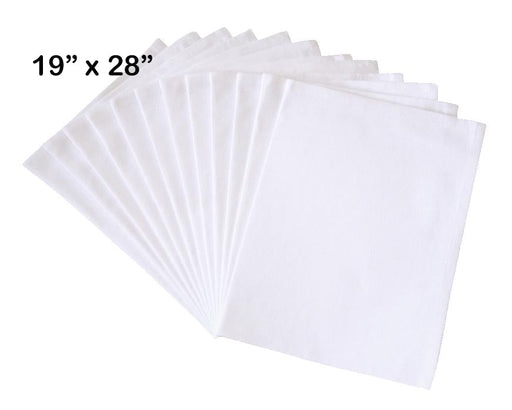
The 19″×28″ rectangle is the classic tea towel format — the size embroidery studios, gift brands, and personalization businesses r...
View full details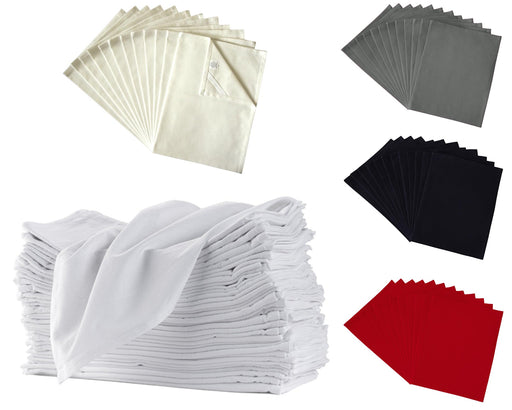
The same heavyweight 130 thread count, 100% cotton flour sack fabric as our white and natural towels — now in six colors: blue, gr...
View full details
Screen printing is the best choice when your design uses solid colors, bold shapes, or clean line art — and you're producing 24 or ...
View full details


